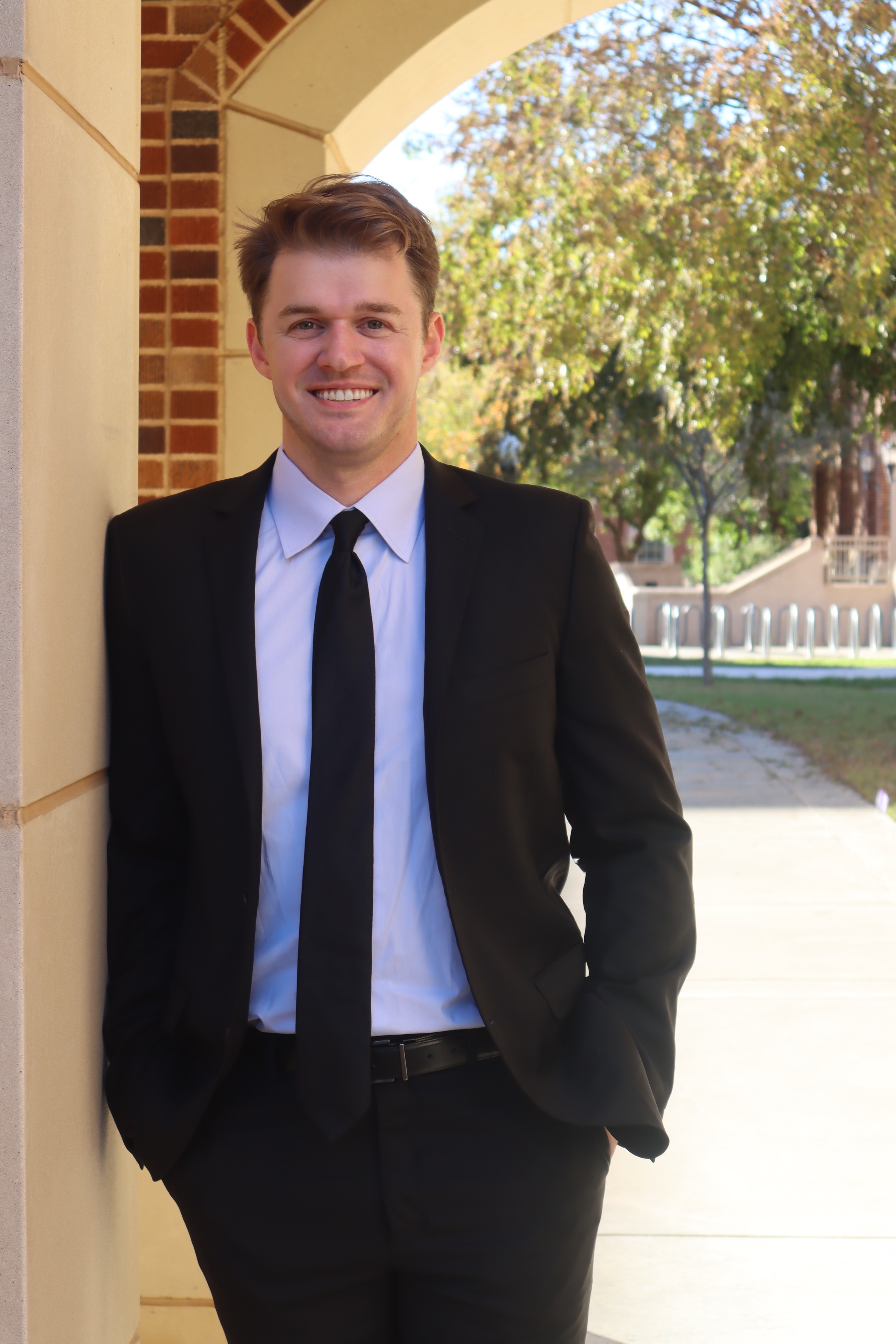
Biography
I am a theoretical and computational astrophysicist studying the dynamic processes that shape planetary systems. My research combines theoretical modeling and numerical simulations to explore planet formation, stellar dynamics, and the evolution of protoplanetary disks, particularly in complex multi-star environments.
I earned my Ph.D. in Astronomy from the University of Nevada, Las Vegas, where I developed simulations of protoplanetary disks in multi-star systems. Currently, at the University of Oklahoma, my work aims to uncover the physical mechanisms that govern planet formation and system stability, bridging gaps between theory and observations.
Research Interests
Investigating the coplanar or polar alignment of protoplanetary disks around binary star systems.
Simulating the evolution of gas and dust in circumbinary disks, focusing on how material flows through the binary cavity via accretion streamers. These streams dynamically replenish the circumstellar disks and drive accretion onto the binary stars, shaping their orbital evolution and potential planet-forming environments.
I investigate the formation mechanisms of circumbinary exoplanets, tracing their origins in the complex environments of circumbinary disks. My work particularly explores how tilted and warped disk configurations influence planet formation processes, including gravitational instabilities, dust dynamics, and planetesimal growth in these perturbed systems.
Polar-aligned circumbinary disks produce unique dust dynamics, creating localized concentrations akin to "traffic jams" in the disk midplane. These dust accumulations may serve as preferential sites for planetesimal growth, potentially explaining the formation pathways of polar circumbinary planets.
Stellar flybys - unbound stars passing near protoplanetary disks - can dynamically perturb disk material, generating observable substructures. These gravitational interactions may explain the rings, gaps, and asymmetries frequently detected in high-resolution disk observations.
Dust rings in misaligned circumbinary disks represent prime observational targets for current facilities like ALMA and future instruments including ngVLA and SKA. These distinctive features offer unique insights into disk dynamics and planet formation processes in binary systems.
The complex disk structure observed around GW Ori - the first known circumtriple protoplanetary disk - may provide direct evidence of a circumtriple planet in formation. This unprecedented system could revolutionize our understanding of planet formation in multiple-star environments.
The persistent metal contamination observed in white dwarf atmospheres provides compelling evidence of ongoing planetary system evolution. These metals likely originate from tidally disrupted asteroids, dynamically perturbed by surviving planets in these ancient systems.
While the astrophysical origin of fast radio bursts (FRBs) remains unresolved, one compelling hypothesis suggests they may result from asteroid-neutron star interactions. In this scenario, accreted asteroidal material undergoes rapid disruption upon impact with the neutron star surface, potentially generating the extreme electromagnetic transients observed as FRBs.
Secular resonances between asteroids and giant planets can dynamically perturb minor bodies onto planet-crossing orbits. This process may serve as a fundamental delivery mechanism for volatiles and organic materials, potentially governing the distribution of key prebiotic compounds throughout planetary systems.
Mentorship & Student Projects
I am passionate about mentoring the next generation of scientists. My goal is to foster a collaborative and inclusive environment where students can develop their critical thinking skills and pursue their own research interests. Below are some examples of ongoing student-led projects.
Stellar Flybys Perturbing Protoplanetary Disks
Student: Wei-Shan Su (Masters Student)
Accretion onto Unequal-mass Binary Star Systems
Student: Ruiqi Yang (Ph.D. Student)
Misaligned Planet-Disk Interactions
Student: Ho Wan Cheng (Masters Student)
Fast-Radio Bursts (FRBs) Triggered by the von Ziepel-Kozai-Lidov (vZKL) Instability
Student: Zhizhen Qin (Ph.D. Student)
Gap dynamics of polar circumbinary planets
Student: Teddy Walsh (Ph.D. Student, University of Oklahoma)
Stellar Flybys Encountering Circumbinary Disc
Student: Michael Munnelly (Undergrad Student, University of Oklahoma)
Polar alignment of dusty circumbinary disks
Student: Sheina Peralta (Undergrad Student, Stony Brook University)
Publications
Selected Publications
2026 | Monthly Notices of the Royal Astronomical Society Letters
The polar debris disc around 99 Herculis: a potential signpost for polar circumbinary planets
Jeremy L. Smallwood, William DeRocco, Zhizhen Qin and Antranik A. Sefilian
2025 | Monthly Notices of the Royal Astronomical Society Letters
Polar alignment of a circumbinary disc around a brown dwarf binary
Jeremy L. Smallwood, Thomas A. Baycroft, Amaury H. M. J. Triaud and Richard P. Nelson
2025 | Monthly Notices of the Royal Astronomical Society Letters
Disc–planet misalignment from an unstable triple system: IRAS04125
Rebecca Nealon, Jeremy L. Smallwood, Hossam Aly, Andrew J. Winter, Cristiano Longarini, Nicolas Cuello, Dimitri Veras and Richard Alexander
2025 | Monthly Notices of the Royal Astronomical Society
Circumbinary accretion as a diagnostic for binary–disc misalignments
Jeremy L. Smallwood, Ya-Ping Li, Hongping Deng and Alessia Franchini
2025 | The Astrophysical Journal Letters
Shedding Light on the Origin of the Broken Misaligned Circumtriple Disk around GW Ori
Jeremy L. Smallwood, Stephen H. Lubow, Rebecca G. Martin, and Rebecca Nealon
2024 | The Astrophysical Journal Letters
Observational Signatures of Dust Traf c Jams in Polar-aligning Circumbinary Disks
Jeremy L. Smallwood, Rebecca Nealon, Hsi-Wei Yen, Christophe Pinte, Cristiano Longarini, Hossam Aly, and Min-Kai Lin
2024 | Monthly Notices of the Royal Astronomical Society
Polar alignment of a dusty circumbinary disc–II. Application to 99 Herculis
Jeremy L. Smallwood, Min-Kai Lin, Rebecca Nealon, Hossam Aly and Cristiano Longarini
2024 | Monthly Notices of the Royal Astronomical Society
Polar alignment of a dusty circumbinary disc – I. Dust ring formation
Jeremy L. Smallwood, Min-Kai Lin, Hossam Aly, Rebecca Nealon and Cristiano Longarini
2024 | Monthly Notices of the Royal Astronomical Society
Formation of misaligned second-generation discs through fly-by encounters
Jeremy L. Smallwood, Rebecca Nealon, Nicolas Cuello, Ruobing Dong, and Richard A. Booth
2023 | Monthly Notices of the Royal Astronomical Society
Formation of the warped debris disc around β Pictoris
Jeremy L. Smallwood
2023 | Monthly Notices of the Royal Astronomical Society
Exciting spiral arms in protoplanetary discs from flybys
Jeremy L. Smallwood, Chao-Chin Yang, Zhaohuan Zhu, Rebecca G. Martin, Ruobing Dong, Nicolas Cuello and Andrea Isella
2023 | Monthly Notices of the Royal Astronomical Society
Formation of polar circumstellar discs in binary star systems
Jeremy L. Smallwood, Rebecca G. Martin and Stephen H. Lubow
2022 | Monthly Notices of the Royal Astronomical Society
Accretion on to a binary from a polar circumbinary disc
Jeremy L. Smallwood, Stephen H. Lubow and Rebecca G. Martin
2021 | Monthly Notices of the Royal Astronomical Society
GW Ori: circumtriple rings and planets
Jeremy L. Smallwood, Rebecca Nealon, Cheng Chen, Rebecca G. Martin, Jiaqing Bi, Ruobing Dong and Christophe Pinte
2021 | Monthly Notices of the Royal Astronomical Society
On the role of resonances in polluting white dwarfs by asteroids
Jeremy L. Smallwood, Rebecca G. Martin, Mario Livio and Dimitri Veras
2021 | The Astrophysical Journal Letters
Sustained Kozai–Lidov Oscillations in Misaligned Circumstellar Gas Disks
Jeremy L. Smallwood, Rebecca G. Martin, and Stephen H. Lubow
2020 | The Astrophysical Journal Letters
GW Ori: Interactions between a Triple-star System and Its Circumtriple Disk in Action
Jiaqing Bi, Nienke van der Marel, Ruobing Dong, Takayuki Muto, Rebecca G. Martin, Jeremy L. Smallwood, Jun Hashimoto, Hauyu Baobab Liu, Hideko Nomura, Yasuhiro Hasegawa, Michihiro Takami, Mihoko Konishi, Munetake Momose, Kazuhiro D. Kanagawa, Akimasa Kataoka, Tomohiro Ono, Michael L. Sitko, Sanemichi Z. Takahash, Kengo Tomida, and Takashi Tsukagoshi
2020 | Monthly Notices of the Royal Astronomical Society
Formation of the polar debris disc around 99 Herculis
Jeremy L. Smallwood, Alessia Franchini, Cheng Chen, Eric Becerril, Stephen H. Lubow, Chao-Chin Yang, and Rebecca G. Martin
2020 | Monthly Notices of the Royal Astronomical Society Letters
Asteroid belt survival through stellar evolution: dependence on the stellar mass
Rebecca G. Martin, Mario Livio, Jeremy L. Smallwood and Cheng Chen
2019 | The Astronomical Journal
Late Delivery of Nitrogen to the Earth
Cheng Chen, Jeremy L. Smallwood, Rebecca G. Martin, and Mario Livio
2019 | Monthly Notices of the Royal Astronomical Society
Alignment of a circumbinary disc around an eccentric binary with application to KH 15D
Jeremy L. Smallwood, Stephen H. Lubow, Alessia Franchini and Rebecca G. Martin
2019 | Monthly Notices of the Royal Astronomical Society
Investigation of the asteroid–neutron star collision model for the repeating fast radio bursts
Jeremy L. Smallwood, Rebecca G. Martin and Bing Zhang
2018 | Monthly Notices of the Royal Astronomical Society
White dwarf pollution by asteroids from secular resonances
Jeremy L. Smallwood, Rebecca G. Martin, Mario Livio and Stephen H. Lubow
Curriculum Vitae
My full CV contains a detailed list of my publications, research grants, conference presentations, and professional experience. Download the latest version below.
Download CV (PDF)Get In Touch
I am always looking for new collaborations and am open to discussing my research. Please don't hesitate to reach out.